Process of Selling a Car: Step-by-Step, Paperwork & DMV
Selling a car on your own can feel overwhelming. Between gathering paperwork, figuring out what your vehicle is actually worth, and meeting strangers for test drives, the process comes with real questions and legitimate safety concerns. You want to get a fair price without getting scammed or tangled in legal problems down the road.
The good news is that selling your car privately is manageable when you break it down into clear steps. You can handle everything from title transfers to safe payment methods without needing a law degree or dealership experience. Most sellers who follow a structured approach complete their sale within a few weeks and walk away with more money than any trade-in offer.
This guide walks you through the complete process from start to finish. You'll learn what paperwork you need before you list, how to price and prepare your vehicle, where to advertise safely, what to watch for during test drives, and exactly how to handle payment and DMV requirements. Whether you're selling in New York or shipping nationwide, you'll know what to do at each stage.
What to know before you sell your car
Before you dive into the process of selling a car, you need to understand three fundamental realities that will shape your entire experience. First, your state's DMV requirements dictate which documents you need and how the title transfer works. Second, your car's actual market value may differ significantly from what you hope to get, and pricing wrong costs you either money or months of waiting. Third, you'll handle real cash and meet strangers, which means you need safety protocols from day one.
Understanding your vehicle's value and market position
Your car's worth depends on factors beyond just the model and mileage. The current market heavily favors certain vehicle types based on gas prices, inventory shortages, and seasonal demand. A four-wheel-drive SUV sells faster in November than in May, while convertibles move quickly in spring but sit during winter. Check what similar vehicles with comparable mileage and condition actually sell for in your area, not just what sellers are asking.
You can't price your car accurately without knowing what buyers are currently paying for similar vehicles in your local market.
The condition of your vehicle matters more than you might think. Small cosmetic issues like worn seats or dashboard cracks can drop your price by hundreds of dollars. Mechanical problems, even minor ones, scare away buyers who assume worse problems hide underneath. Service records prove you maintained the vehicle properly, which builds buyer confidence and justifies a higher asking price.
State-specific requirements you can't ignore
Every state handles vehicle sales differently, and missing one required document can stall your sale for weeks. Some states require a notarized title, while others accept a standard signature. Emissions testing certificates are mandatory in certain states but don't exist in others. You might need to provide a bill of sale, a release of liability form, or proof of a recent inspection depending on where you live.
Check your state's DMV website before you list your car to understand exactly what paperwork you need. New York, for example, requires sellers to remove their license plates and submit a vehicle transfer notification, while other states let buyers transfer existing plates. California mandates a smog check certificate dated within 90 days of sale. Getting these details wrong doesn't just delay the sale, it can leave you legally responsible for the vehicle after you think you've sold it.
Step 1. Decide how you want to sell
The process of selling a car starts with choosing your sales method, and this decision directly impacts how much money you keep, how quickly you sell, and how much work you'll do. Three main options exist: selling privately (highest payout but most effort), trading in at a dealership (fastest but lowest return), or using an instant cash offer service (middle ground on both speed and price). Your choice depends on whether you prioritize maximum profit, convenience, or speed of sale.
Private sale vs. dealership trade-in
Private sales typically net you 15-25% more than dealership trade-ins because you negotiate directly with the buyer and avoid dealer markup. You handle all advertising, showings, negotiations, and paperwork yourself. Dealerships offer convenience by handling paperwork, accepting your car in any condition, and completing the transaction in hours instead of weeks. The tradeoff is straightforward: more money requires more work.
Trading in your car at a dealership saves time but costs you thousands in potential profit compared to a private sale.
Consider a trade-in if you're buying another car from that dealer (potential sales tax savings), need to sell quickly, or have a vehicle with mechanical issues that would scare private buyers. Choose a private sale when your car is in good condition, you have time to manage the process, and maximizing profit matters more than convenience.
Online marketplaces and instant cash offers
Instant cash offers from services provide a guaranteed price within minutes and let you complete the sale at participating dealers within days. These offers typically fall between private sale and trade-in values. Online marketplaces like Facebook Marketplace and Craigslist reach thousands of local buyers but require you to screen inquiries, schedule showings, and manage safety concerns throughout the process.
Specialized platforms such as private seller exchanges provide verified buyers, secure payment processing, and title handling for a fee. These services reduce risk but still require more effort than simply taking your car to a dealer. Your vehicle's condition and your comfort level with meeting strangers should guide this choice.
Step 2. Get your paperwork in order
Gathering your paperwork before listing your car prevents delays and builds buyer confidence when someone wants to purchase immediately. Missing documents kill deals at the worst possible moment, right when a buyer has cash in hand and wants to finalize the transaction. Start this step early because replacing lost titles or tracking down service records takes time you won't have once negotiations begin.
Essential documents you need
The vehicle title stands as your most critical document because you cannot legally transfer ownership without it. Your title must be clear (no liens), in your name, and physically in your possession. Check the front and back of your title now to confirm all information matches your current registration and that no lender holds a lien. If you still owe money on the car, contact your lender immediately to understand their payoff process before you can sell.
Service and maintenance records prove you cared for the vehicle properly and justify your asking price. Buyers pay more for cars with documented oil changes, tire rotations, and major service completions. Gather all receipts from your mechanic, dealership service department, and any warranty work performed. If you don't have physical receipts, call your service provider and request a maintenance summary with dates and mileage for each service.
Complete service records can increase your selling price by hundreds of dollars because they give buyers confidence in the vehicle's condition.
Your current registration and insurance card confirm the vehicle is yours and legal to drive. You'll also need your driver's license during the sale to prove your identity matches the name on the title. Keep your owner's manual if you still have it, as this simple addition shows attention to detail that buyers appreciate.
Creating your bill of sale
A bill of sale protects both you and the buyer by documenting the exact terms of your agreement. This document includes the vehicle identification number (VIN), sale price, odometer reading, date of sale, and signatures from both parties. Many states require a notarized bill of sale, while others accept a standard signed document. You can find basic bill of sale forms at your DMV website, but creating your own ensures you include all necessary details.
Here's a template you can customize for your sale:
VEHICLE BILL OF SALE

Seller Information:
Name: _______________________
Address: _____________________
Driver's License #: ____________

Buyer Information:
Name: _______________________
Address: _____________________
Driver's License #: ____________

Vehicle Information:
Year: _____ Make: _____ Model: _____
VIN: _________________________
Odometer Reading: _____________ miles
(as of sale date)

Sale Price: $__________
Payment Method: __________
Date of Sale: __________

Seller certifies this vehicle is sold "AS IS" without warranty.
Seller has disclosed all known defects to buyer.

Seller Signature: _____________ Date: _____
Buyer Signature: _____________ Date: _____
Print at least three copies: one for you, one for the buyer, and one to submit with your DMV paperwork if required.
State-specific paperwork
Different states require unique documents beyond the standard title and bill of sale. California mandates a smog certification dated within 90 days of sale, while states like Texas require vehicle inspections. New York sellers must complete a Statement of Transaction (Form DTF-802) and submit it to the DMV within 30 days.
Visit your state's DMV website and search for "selling a vehicle" to find your specific requirements. Download any required forms now so you can complete them before meeting your buyer. Some states also require a release of liability form that you submit to the DMV immediately after selling, which protects you from tickets or violations the new owner might incur.
Step 3. Prepare, inspect and price your car
Your car's condition and price directly determine how quickly you sell and how much money you receive. First impressions matter tremendously when buyers evaluate your vehicle, and a dirty interior or visible damage immediately lowers their mental price point. Investing time in preparation typically returns several hundred dollars in additional sale price, while accurate pricing prevents your listing from sitting unsold for months.
Cleaning and minor repairs that pay off
Professional detailing costs $150-300 but can increase your sale price by $500-800 because buyers perceive a clean car as well-maintained. If professional detailing exceeds your budget, you can achieve similar results yourself with basic supplies and time. Focus on removing all personal items, shampooing carpets and seats, cleaning the dashboard and windows, and eliminating odors from smoking, pets, or food.
The exterior requires equal attention to maximize appeal. Wash and wax the entire vehicle, clean the wheels and tires thoroughly, and ensure all lights work properly. Replace burned-out bulbs immediately, as non-functioning lights signal neglect to potential buyers. Small dent and scratch repairs through paintless dent removal or touch-up paint cost little but significantly improve first impressions.
Address these mechanical issues before listing:
- Replace worn windshield wipers ($15-30)
- Fix cracked windshields if the crack is small (under $100)
- Top off all fluids (oil, coolant, washer fluid, brake fluid)
- Inflate tires to proper pressure
- Replace air filters if visibly dirty ($20-40)
- Fix any dashboard warning lights
Avoid major mechanical repairs unless the issue prevents the vehicle from running safely. Replacing a transmission or engine costs thousands and rarely returns that investment when selling. Instead, price the car lower and disclose the problem honestly.
Getting a pre-sale inspection
A pre-sale inspection from a trusted mechanic costs $100-150 and identifies problems you might miss. This inspection gives you leverage during negotiations because you already know what a buyer's mechanic will find. You can address issues beforehand or adjust your price accordingly, which prevents last-minute negotiation surprises.
A pre-sale inspection protects you from buyers who try to renegotiate after their mechanic finds problems you didn't know existed.
Request a written report that lists all findings with estimated repair costs. Keep this report available during showings, as transparency about known issues builds trust with serious buyers. Some sellers include the inspection report in their listing, which attracts confident buyers who appreciate the honesty.
Setting the right price
Pricing accurately accelerates the process of selling a car while maximizing your profit. Research what similar vehicles (same year, make, model, and mileage) actually sold for, not just asking prices. Check completed sales on local online marketplaces and use multiple valuation tools to establish a realistic range.
Your pricing strategy depends on your timeline. If you need to sell within two weeks, price at or slightly below market value to generate immediate interest. Building in negotiation room of 5-10% above your minimum acceptable price gives you flexibility when buyers inevitably counteroffer.
Create a pricing worksheet to determine your numbers:
| Factor | Amount | Notes |
|---|---|---|
| Base market value | $______ | From valuation tools |
| Condition adjustment | +/- $______ | Excellent: +$500-1000, Poor: -$500-1000 |
| Low mileage bonus | + $______ | $500 per 10,000 miles below average |
| New tires/brakes | + $______ | Recent replacements add value |
| Accident history | - $______ | $500-2000 depending on severity |
| Your asking price | $______ | List price with negotiation room |
| Your minimum price | $______ | Lowest you'll accept |
Your asking price should attract buyers while leaving room for negotiation. Price too high and you waste weeks with no inquiries. Price at market value and you'll receive multiple offers quickly, which creates competition that may push the final price higher than expected.
Step 4. Advertise your car and screen buyers
Creating an effective advertisement and filtering potential buyers determines how quickly you sell and whether you waste time with scammers or tire-kickers. Your listing serves as your first impression to hundreds of potential buyers, and a poorly written ad with bad photos generates few inquiries while a professional presentation attracts serious offers within hours. The screening process protects your time by identifying legitimate buyers before you schedule showings, and knowing what red flags to watch for prevents you from falling victim to common scams.
Writing an effective car listing
Your advertisement needs specific details that answer the questions every buyer asks before contacting you. Include the year, make, model, trim level, mileage, VIN, asking price, and reason for selling in the first two sentences. Buyers skip vague listings that lack basic information because they assume you're hiding problems or don't understand what you're selling.
The description should highlight your vehicle's best features while honestly disclosing any issues. Mention recent maintenance like new tires, fresh brakes, or completed major services with dates and mileage. List optional equipment such as leather seats, navigation, sunroof, or advanced safety features. State your payment preferences upfront (cash, cashier's check, online payment) and whether your price is firm or negotiable.
A detailed, honest listing with professional photos attracts serious buyers while filtering out people who aren't genuinely interested in your specific vehicle.
Use this template as a starting point for your description:
20XX [Make] [Model] [Trim] - $X,XXX

[Mileage] miles | [Color] | [Transmission type]
VIN: [Full VIN number]

Recently completed maintenance:
- [Service 1] at [mileage]
- [Service 2] at [mileage]

Key features:
- [Feature 1]
- [Feature 2]
- [Feature 3]

Known issues:
- [Issue 1, if any]
- [Issue 2, if any]

Reason for selling: [Brief explanation]

Clean title in hand. All service records available.
Price: $[Amount] [firm/negotiable]
Contact: [Phone or email]
Photos make or break your listing, so take at least 10-15 clear images in good natural lighting. Capture the front, rear, both sides, interior from multiple angles, dashboard showing mileage, engine bay, and closeups of any damage. Clean the car thoroughly before taking photos, as dirty vehicles photograph poorly and suggest neglect.
Choosing the right platforms
Facebook Marketplace and Craigslist reach the most local buyers for free, making them ideal starting points for the process of selling a car. Facebook Marketplace integrates with Facebook profiles, which provides some buyer verification, while Craigslist offers complete anonymity but attracts more scammers. Post on both platforms to maximize visibility.
Specialized automotive marketplaces like Autotrader charge listing fees but connect you with serious buyers actively shopping for cars. These platforms often provide secure messaging systems and fraud protection tools. Your vehicle's value determines whether paid listings make sense: exotic or high-value vehicles justify listing fees, while basic economy cars sell fine on free platforms.
Screening and responding to inquiries
Your first conversation with a potential buyer reveals their seriousness. Legitimate buyers ask specific questions about the vehicle's history, mechanical condition, and reason for selling. Respond to serious inquiries within hours with detailed answers and additional photos if requested. Slow responses cost you sales when buyers move on to other listings.
Watch for these common scam red flags in messages:
- Offers to buy without seeing the vehicle
- Requests to ship the car overseas
- Payment offers above your asking price
- Pressure to complete the transaction immediately
- Requests for personal information before meeting
- Poor grammar suggesting automated messages
- Payment through unfamiliar services or apps
Ask buyers basic qualifying questions before scheduling showings: Do they need financing or have cash ready? Have they seen the vehicle in person yet? When can they meet? Their answers reveal whether they're ready to buy or just browsing. Ignore anyone who refuses to meet in person or insists on unusual payment methods.
Save time by providing complete information upfront in your responses. Send additional photos, the vehicle history report if you have one, and your availability for showings all in your first reply. This approach filters out casual browsers while moving serious buyers toward scheduling a meeting.
Step 5. Meet safely and manage test drives
The test drive stage of the process of selling a car presents the highest risk for personal safety and vehicle theft, which means you need clear protocols before any buyer sits behind the wheel. Meeting strangers with cash or expensive property requires the same caution you would use in any high-value transaction. Your safety and your vehicle's security matter more than completing any single sale, so trust your instincts and walk away from situations that feel wrong.
Choosing a safe meeting location
Always meet buyers in public places with security cameras and heavy foot traffic during daylight hours. Police station parking lots specifically designated as "safe exchange zones" provide the best protection, though busy shopping center lots work well too. Never meet buyers at your home or allow them to pick you up from your residence, as this reveals personal information you can't take back.
Bring someone with you to every meeting and test drive. A friend or family member acts as both witness and deterrent to potential theft or fraud. If you absolutely cannot bring someone, inform a trusted person of your meeting location, the buyer's contact information, and your expected return time.
Managing the test drive safely
Verify the buyer's driver's license before handing over your keys and take a clear photo of both sides with your phone. This photo gives you recourse if something goes wrong and confirms the person is legally allowed to drive. Check that your insurance covers test drives by calling your provider before scheduling any showings, as some policies exclude coverage for non-household drivers.
Never let a potential buyer test drive your vehicle alone, regardless of what collateral they offer to leave with you.
Accompany every buyer during the test drive and plan a short 10-15 minute route through populated areas. Map out your route beforehand so you direct the driver rather than letting them choose where to go. Stay alert during the drive and refuse any requests to stop at banks, other addresses, or isolated areas.
Verifying buyer credentials
Ask to see proof of insurance in addition to their driver's license before the test drive begins. Serious buyers carry insurance cards and won't hesitate to show them. Document the buyer's license plate number if they arrived in their own vehicle, as this provides additional verification of their identity.
Watch for these warning signs that should end the meeting immediately:
- Buyer arrived without identification
- Multiple people show up unexpectedly
- Requests to drive alone "just around the block"
- Pressure to go to a secondary location
- Inability to produce insurance proof
- Aggressive or hostile behavior
Step 6. Close the deal, payment and DMV steps
The final stage in the process of selling a car requires precision with paperwork and payment to protect yourself legally and financially. This phase transforms your verbal agreement into a legally binding transaction that transfers ownership to the buyer while removing your liability for the vehicle. Missing even one step can leave you responsible for tickets, accidents, or insurance claims after you think the sale is complete.
Negotiating the final price
Buyers will almost always counteroffer below your asking price, so prepare your response before negotiations begin. Know your absolute minimum acceptable price before the meeting and stick to it, regardless of buyer pressure tactics. Most buyers expect to negotiate 5-10% off the asking price, so build this cushion into your listing price from the start.
Listen to the buyer's reasoning when they make a counteroffer rather than immediately rejecting it. If they point out legitimate issues you missed during your preparation, consider whether the concerns justify a price reduction. However, walk away from buyers who use aggressive tactics, claim to have better offers elsewhere, or manufacture problems during the test drive to justify lowballing you.
Counter these common buyer tactics with confidence:
- "I found cheaper options online" - Invite them to buy those vehicles instead
- "I need to think about it" - Give them 24 hours then move to your next buyer
- "My mechanic found issues" - Ask for the written inspection report
- "I only have $X in cash" - Stick to your minimum or end the negotiation
- "The Blue Book value is lower" - Reference actual sold prices, not estimates
Document your agreed price in writing before accepting any payment. Send a text message or email confirming the exact amount and payment method to create a clear record both parties can reference later.
Accepting payment safely
Payment acceptance represents the highest fraud risk in vehicle sales because scammers use sophisticated tactics to hand you worthless checks or counterfeit cash. Cashier's checks can be faked, and your bank may not discover the fraud until days after you've handed over the vehicle. The safest payment method is meeting the buyer at their bank during business hours and watching the teller issue the cashier's check directly to you.
Meeting at the buyer's bank and watching them obtain the cashier's check eliminates the risk of accepting counterfeit payment documents.
Verified online payment services like Zelle or Venmo work for smaller transactions under $5,000 but often impose daily transfer limits that make them impractical for most vehicle sales. Physical cash works if you meet at a bank where you can deposit it immediately and have the teller verify authenticity using bill-counting machines. Never accept personal checks, money orders, or payment plans regardless of the buyer's story.
Verify payment clears your account before releasing the vehicle and title. For cashier's checks, call the issuing bank using the phone number from their website (not the number printed on the check) to confirm the check is legitimate and the funds exist. This verification takes 5 minutes and prevents losing thousands of dollars to check fraud.
Completing the title transfer
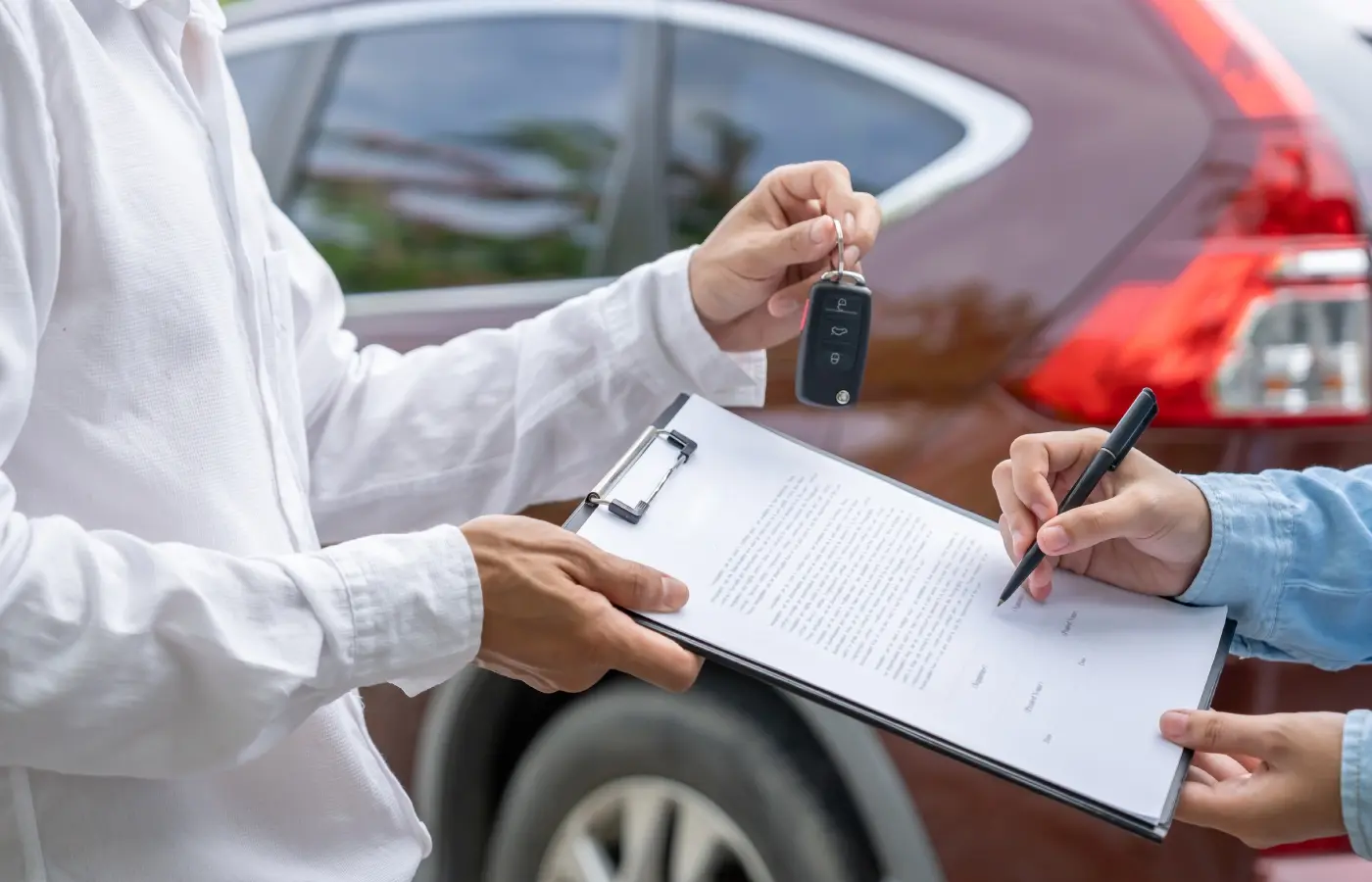
Sign your vehicle's title in the presence of the buyer using the designated seller signature area on the back of the document. Fill out the odometer reading exactly without rounding to the nearest thousand miles, as federal law requires precise odometer disclosure. Write the sale date and sale price in the designated fields, and have the buyer sign as the purchaser immediately.
Check your state's notary requirements before meeting the buyer. Some states mandate notarized signatures for title transfers, which means you need to complete the signing at a bank or notary office. Keep a copy or photo of the completed title showing both signatures before handing the original to the buyer. This copy protects you if disputes arise later about the sale terms or date.
Complete your bill of sale simultaneously with the title transfer and have both parties sign all copies. Print three copies: one for you, one for the buyer, and one to submit to your DMV if required. Include these mandatory details in your bill of sale:
Vehicle: [Year Make Model]
VIN: [Complete 17-digit VIN]
Sale Date: [MM/DD/YYYY]
Odometer: [Exact mileage]
Sale Price: $[Amount]
Sold AS-IS without warranty

Seller acknowledges payment received in full.
Buyer accepts vehicle in current condition.

Seller: [Name, Address, Signature, Date]
Buyer: [Name, Address, Signature, Date]
Submitting DMV paperwork
File your release of liability or transfer notification with your state DMV within 24 hours of completing the sale. This filing removes your legal responsibility for the vehicle and prevents you from receiving tickets or citations the new owner incurs. Most states allow online submissions through their DMV website, which provides instant confirmation and a reference number for your records.
Remove your license plates before the buyer drives away unless your state allows plate transfers to new owners. Return your plates to the DMV within the timeframe your state requires (typically 30 days) and request a receipt showing you surrendered them. This receipt proves you no longer possess the plates if they appear in future violations or toll charges.
Cancel or transfer your insurance coverage immediately after completing the sale to avoid paying for insurance on a vehicle you no longer own. Call your insurance provider with the sale date and request they end coverage effective that day. Keep the confirmation number from this call in case billing issues arise later. Your insurance company may provide a small refund for unused premium if you prepaid your policy.
Retain copies of all paperwork (bill of sale, signed title copy, DMV submission confirmation, license plate receipt) for at least one year after the sale. Store digital copies in cloud storage as backup in case physical documents get lost. These records protect you if the buyer fails to register the vehicle or disputes arise months after you completed the transaction.
Ready to sell your car
You now have the complete roadmap for the process of selling a car from initial preparation through final DMV paperwork. Every step matters when protecting yourself legally and maximizing your sale price, so review this guide whenever you reach a new stage in your transaction. Document everything in writing, trust your instincts about buyer behavior, and never skip the DMV notification steps that remove your liability.
If handling the entire private sale process feels like more work than you want to manage right now, you have alternatives. Get an instant cash offer from Certified AutoBrokers in minutes and skip the advertising, test drives, and payment concerns completely. Our appraisal tool provides real-time valuations based on your vehicle's actual condition, and you can complete the transaction quickly at our Grand Island location. Whether you sell privately or to us, you'll walk away with cash and peace of mind knowing the sale was handled correctly.