Cross Traffic Alert: What It Is, How It Works, and Settings
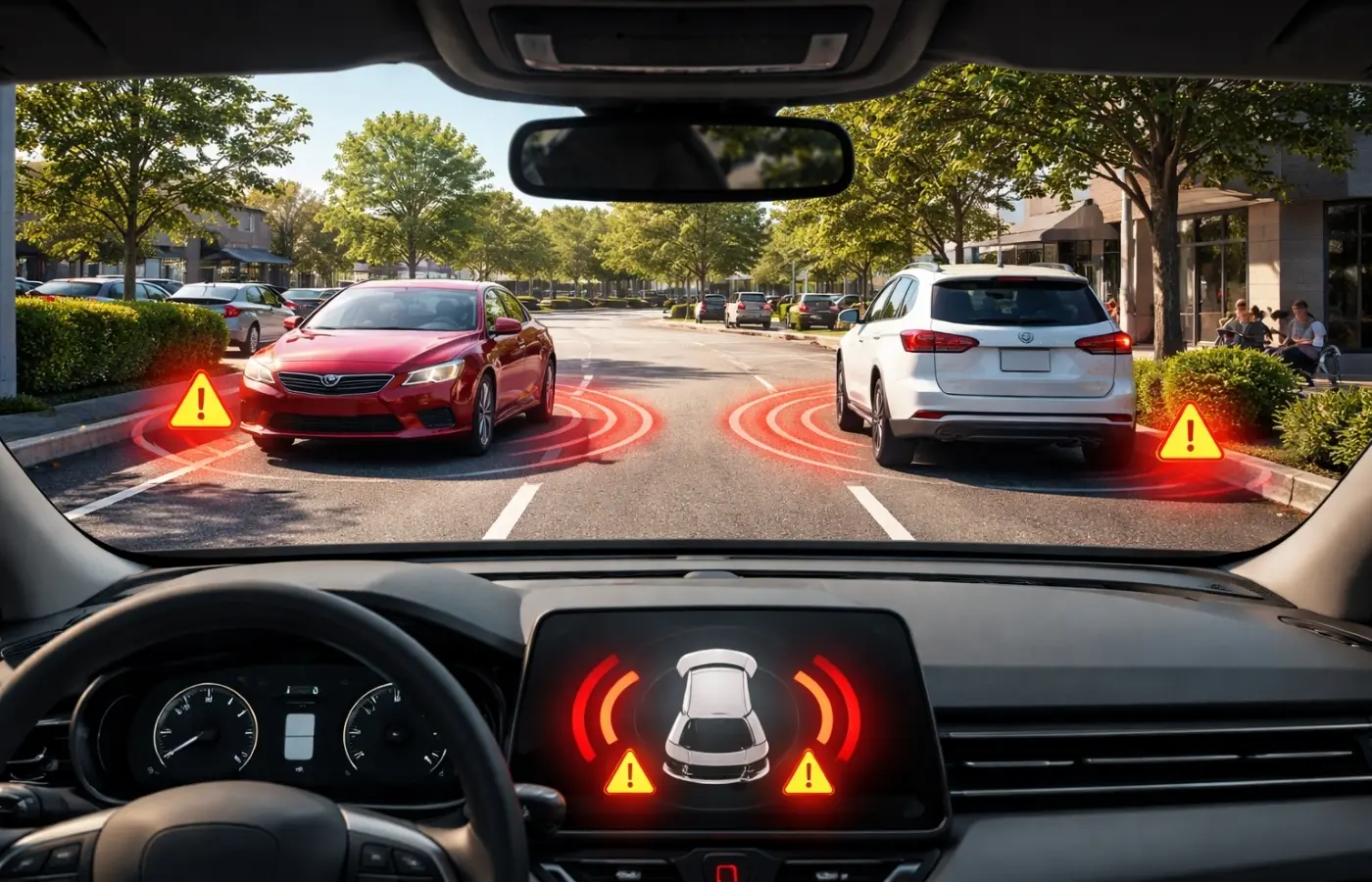
Cross traffic alert is a safety feature that warns you when vehicles approach from the side while you're backing up. Rear cross traffic alert uses sensors near your rear bumper to detect cars, trucks, or SUVs coming from the left or right. When the system spots approaching traffic, it sends you audible beeps and visual warnings on your dashboard or mirrors. This gives you extra time to stop before a collision happens in parking lots or driveways where you can't see what's coming.
Click here to see our inventory equipped with Cross Traffic Alert
This guide walks you through everything you need to know about cross traffic alert. You'll learn how to activate and use the system, adjust its sensitivity settings, and understand when it works best. We'll also cover limitations you should watch for, explain differences between car brands, and answer common questions about the technology. Whether you're shopping for a vehicle with this feature or want to use it better in your current car, you'll find practical tips that help you back out safely.
Why cross traffic alert is important
Backing out of parking spaces causes over 210 accidents every day in the United States, according to safety studies. You face serious risk when parked between larger vehicles like SUVs or vans that block your side view. Cross traffic alert gives you extra awareness that your mirrors and backup camera can't provide, especially when objects or vehicles hide approaching traffic from your sight line.
Preventing common backing accidents
The system protects you in crowded parking lots where cars move quickly through lanes while you're reversing. Kids on bicycles, shopping carts, and fast-moving vehicles can appear suddenly when you're focused on the space behind you. This technology detects movement up to 82 feet away on each side, giving you several seconds to stop before impact.
Cross traffic alert serves as your second set of eyes when visibility is limited during reverse maneuvers.
Dealerships report that buyers specifically request this feature after experiencing close calls in parking situations.
How to use cross traffic alert
Cross traffic alert activates automatically when you shift into reverse and your vehicle moves at 3 mph or less. The system stays active as long as you're backing up slowly, scanning both sides for approaching vehicles. You don't need to press any buttons or flip any switches during normal operation because the sensors turn on the moment your transmission engages reverse gear.
Activating the system
Most vehicles come with cross traffic alert turned on by default, but you should verify this in your settings menu. Check your infotainment screen under the driver assistance or camera settings section. Some manufacturers place the control button near the rearview camera display as a touchable icon labeled "RCTA" or "CTA" that you can toggle on or off.
Reading the warning signals
When the system detects approaching traffic, you'll hear rapid beeping sounds that grow louder as the vehicle gets closer. Your backup camera screen displays colored arrows or flashing icons showing which direction the traffic comes from (left or right). Yellow or red indicator lights may also appear on your side mirrors to grab your attention immediately.
Always look over both shoulders and check your mirrors even when cross traffic alert is active, as it supplements rather than replaces your own observation.
Best practices while reversing
Back out slowly and steadily to give the sensors maximum detection time. The system works best when your rear bumper clears parked cars or objects that might block the radar view. Stop immediately when you hear or see warnings, then check visually before continuing to reverse.
Adjusting cross traffic alert settings
You can customize cross traffic alert settings through your vehicle's infotainment system to match your preferences and driving conditions. Most manufacturers place these controls under "Driver Assistance," "Safety Features," or "Camera Settings" menus on your center touchscreen. Accessing the settings takes only a few taps, and changes save automatically when you exit the menu.
Finding the settings menu
Navigate to your main settings screen by pressing the Home button on your touchscreen display. Look for sections labeled "Vehicle Settings" or "Preferences" where driver assistance features live. Some brands like Honda and Ford place the cross traffic alert toggle directly on the backup camera screen as a small icon you can touch while in reverse gear.
Sensitivity and volume adjustments
Many vehicles let you adjust alert sensitivity between high, medium, and low settings depending on how early you want warnings. Higher sensitivity triggers alerts sooner when vehicles are farther away, while lower settings reduce false alarms in busy parking lots. You can also change the warning volume or disable audio alerts entirely if you prefer only visual notifications on your screen and mirrors.
Adjusting sensitivity helps reduce unnecessary alerts in environments where many vehicles pass behind you constantly.
Test your new settings in a safe parking area before relying on them in traffic.
How cross traffic alert works and its limits
Your vehicle's cross traffic alert relies on millimeter-wave radar sensors mounted inside the rear bumper on both the left and right sides. These sensors emit radio waves that bounce off approaching vehicles and return to the sensor, allowing the system to calculate distance, speed, and direction. When an object moves within the detection zone (typically 82 feet on each side), your vehicle's computer processes the signal and triggers warnings if it determines a collision risk exists.
The radar detection system
The sensors scan continuously while you're in reverse, creating invisible detection zones that extend outward from your rear corners. Each sensor covers a specific area shaped like a wedge that widens as it extends from your bumper. The system identifies larger metal objects best, which means cars and trucks register more reliably than smaller items like bicycles or pedestrians.
Known system limitations
Cross traffic alert struggles with several common situations that you should understand before relying on it completely. The sensors can't detect vehicles approaching faster than 20 mph or slower than 3 mph because they fall outside the system's programmed speed range. Objects moving directly away from your vehicle also escape detection since the radar tracks crossing paths, not retreating ones.
Cross traffic alert works as a helpful assistant but cannot replace your own visual checks when backing up.
Angled parking spots reduce effectiveness because the detection zones point in the same direction as your vehicle rather than across the traffic lane. Large trucks or walls blocking the sensors prevent them from seeing approaching vehicles until your rear bumper clears the obstruction.
Brand names, setup tips, and common questions
Different automakers use various names for cross traffic alert even though the technology works similarly across brands. Understanding these differences helps you locate the feature in your specific vehicle and communicate clearly with service technicians when you need support. Most manufacturers include this safety feature in mid-level trims and above, though availability varies by model year and package.
Brand-specific names and variations
Honda calls it Cross Traffic Monitor (CTM), while Ford and Lincoln label it as part of BLIS with Cross-Traffic Alert. Toyota uses Rear Cross-Traffic Alert (RCTA), and Chevrolet often pairs it with Rear Cross Traffic Alert Braking. You'll find Hyundai and Kia vehicles equipped with Rear Cross-Traffic Collision Warning, which functions identically despite the different name. Check your owner's manual or the sticker on your driver's door jamb to confirm which system your vehicle has.
Enabling the feature properly
Access your settings menu through the infotainment screen by selecting Home, then Settings, followed by Camera or Driver Assistance options. Toggle the cross traffic alert switch to "On" if it's disabled. Some vehicles require you to keep the system enabled separately from the backup camera, so verify both features show as active in your settings display.
Your owner's manual provides the exact menu path for your specific model year and trim level.
Final thoughts on cross traffic alert
Cross traffic alert gives you an extra layer of protection when backing out of parking spaces where visibility is limited. This technology works best when you combine it with your own visual checks and back up slowly enough for the sensors to detect approaching vehicles. Remember that the system has limitations with small objects, certain speeds, and angled parking situations, so you should never rely on it completely without checking your surroundings.
Modern vehicles increasingly include this feature as standard equipment in safety packages, making it easier to find on the lot. If you're shopping for a car with cross traffic alert and other advanced safety technologies, browse our inventory of used cars to find vehicles equipped with the protection features you need.