The Complete Guide to Lane Keep Assist: Setup, Pros, Cons
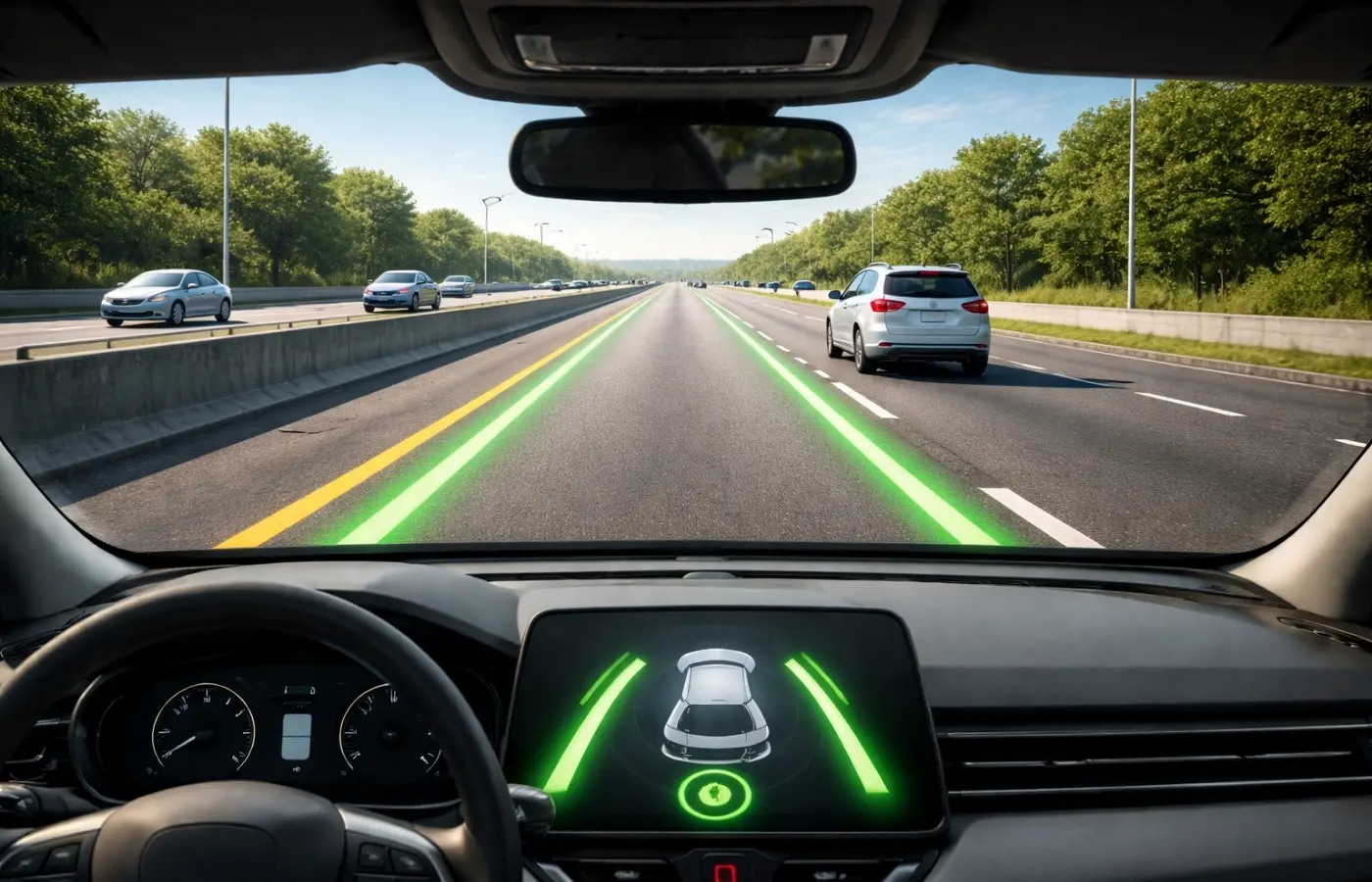
Lane keep assist monitors your vehicle's position between lane markings and gently steers you back when you start drifting out of your lane. This driver assistance feature uses a forward facing camera mounted behind your windshield to read the painted lines on the road and provides subtle steering corrections to help you stay centered in your lane. Unlike lane departure warning that only alerts you with sounds or vibrations, lane keep assist actually takes action by nudging your steering wheel back toward the middle of the lane.
Click here to see our inventory equipped with Lane Keep Assist / Lane Departure Warning
This guide walks you through everything you need to know about lane keep assist and how it works in different vehicles. You'll learn how to activate and use the system in your vehicle, understand exactly what it can and cannot do, and explore the real world pros and cons based on actual driver experiences. We'll also cover what to look for when buying a used car equipped with this technology and how different automakers implement their specific versions of the feature.
Why lane keep assist matters for safety
Lane drift crashes account for a significant portion of highway fatalities and injuries that happen every year on American roads. Lane departure crashes caused over 38% of two-vehicle fatal accidents according to National Safety Council research, with many of these incidents occurring when drivers were fully alert and believed they were in control. You might not realize how often your vehicle drifts slightly toward lane markings during normal highway driving, especially on long trips or in monotonous traffic conditions. Lane keep assist addresses this problem by monitoring your position constantly and intervening before a minor drift becomes a dangerous situation.
The hidden danger of lane drift
Three primary factors cause most lane departure accidents: driver fatigue, distraction, and temporary incapacitation from medical events or substances. Fatigue affects your ability to maintain consistent steering inputs during highway driving, causing subtle drifts that happen so gradually you may not notice until it's too late. Distraction pulls your visual attention away from the road for just a few seconds, which is all it takes for your vehicle to cross into another lane or drift onto the shoulder at highway speeds.
Lane keep assist works as a safety net for the moments when human attention inevitably wavers, providing corrections before small mistakes turn into collisions.
Active protection when you need it most
The system provides continuous monitoring that never gets tired, distracted, or looks away from the road ahead. When you start to drift out of your lane without signaling, lane keep assist detects the movement and applies gentle steering pressure to guide you back to center. This intervention happens quickly enough to prevent side swipe collisions with vehicles in adjacent lanes or run-off-road crashes that occur when drivers drift onto shoulders. Your vehicle can correct course within seconds of detecting unwanted drift, often before you consciously register the problem yourself.
How to set up and use lane keep assist
Most vehicles with lane keep assist include a dedicated button on the steering wheel or instrument panel that activates the system with a single press. You'll typically find this button marked with an icon showing a car between two parallel lines, making it easy to identify among other controls. Once you press the button, your instrument cluster displays a confirmation message or illuminated green icon to show the system is active and monitoring lane markings ahead. The entire activation process takes just seconds, and most systems remember your preference between trips, though some require manual activation each time you start the vehicle.
Finding and activating the system
Look for the lane keep assist button on the right side of your steering wheel near other driver assistance controls like adaptive cruise control. Honda, Toyota, and Ford vehicles place the button in this standard location, while some luxury brands integrate the control into a touchscreen menu or central console interface. Your owner's manual provides the exact button location and activation steps specific to your vehicle model and year, which can vary significantly between manufacturers and even different trim levels of the same car.
The system only activates when you're traveling between 45 and 90 miles per hour on roads with clearly visible lane markings.
Operating conditions and requirements
Lane keep assist needs several conditions met before it begins providing steering assistance to keep you centered in your lane. Your vehicle must be traveling at highway speeds, typically between 45 and 90 mph, with your hands resting on the steering wheel so the system can detect your grip. The forward facing camera must clearly see painted lane markings on both sides of your lane, which means the system won't work on unmarked roads, in construction zones with temporary markings, or when snow, mud, or heavy rain obscures the lines. Some advanced systems can detect the edge of the road as a lane boundary, but most rely exclusively on painted markings to function properly.
Overriding and disengaging the feature
You can override lane keep assist anytime by simply applying resistance to the steering wheel when the system tries to correct your position. This steering resistance tells the system you're intentionally changing lanes or avoiding an obstacle, causing it to immediately disengage and let you maintain full control. Using your turn signal before changing lanes also disables the system temporarily, allowing you to move into another lane without fighting the steering assistance. If you want to completely turn off the feature, press the same button you used to activate it, and the green indicator light will turn off to confirm the system is no longer monitoring your lane position.
What lane keep assist can and cannot do
Understanding the actual capabilities and boundaries of lane keep assist helps you use the system safely and avoid over-relying on technology that has specific limitations. The system excels at specific tasks under ideal conditions but cannot replace your attention and active driving responsibility. You need to know exactly what to expect from the technology so you can make informed decisions about when to trust it and when to take complete manual control.
What the system does effectively
Lane keep assist monitors your vehicle's position within clearly marked lanes and provides gentle steering corrections when you drift too close to either side without signaling. The system works continuously at highway speeds to help you maintain a centered position in your lane, reducing the small wandering movements that naturally occur during long drives. Your vehicle can detect painted lane markings on both sides and calculate the optimal position between them, then apply subtle pressure through the power steering to guide you back when necessary.
The technology helps reduce driver fatigue on long highway trips by handling the constant micro-adjustments needed to stay perfectly centered. You still maintain full control and can override the system instantly by applying slight pressure to the steering wheel in any direction. Most systems work effectively in clear weather conditions with well-maintained lane markings, providing reliable assistance during daytime and nighttime driving on major highways.
Important limitations to understand
Lane keep assist cannot function without visible lane markings, which means the system becomes useless in construction zones, on unmarked roads, or when snow and debris cover the painted lines. The forward camera needs a clear view of both lane boundaries to calculate your position, and anything that blocks or obscures those markings will cause the system to disengage. Heavy rain, fog, and sun glare can all prevent the camera from reading lane markings accurately, leaving you without assistance exactly when conditions become challenging.
The system will not prevent accidents caused by other drivers, sudden obstacles in your lane, or situations requiring quick evasive maneuvers.
The technology provides gentle steering suggestions but cannot execute sharp turns or aggressive corrections needed in emergency situations. You must keep your hands on the wheel at all times because the system disengages if it detects you've removed them for more than a few seconds. Lane keep assist works as a helpful assistant for routine highway driving, not as a substitute for your constant attention and readiness to take control.
Pros and cons of lane keep assist
Lane keep assist delivers specific advantages while presenting certain limitations that affect your daily driving experience. Understanding both sides helps you decide whether to activate the feature regularly or reserve it for particular situations. Your driving habits, typical routes, and personal preferences all influence how valuable this technology becomes in your vehicle.
Benefits that improve your driving experience
The primary advantage comes from reduced driver fatigue during long highway trips when maintaining perfect lane position requires constant small corrections. You experience less physical strain on your arms and shoulders because the system handles the subtle steering adjustments that would normally demand your continuous attention. Highway driving becomes more relaxing when you can trust the technology to help maintain your position, especially during monotonous stretches of interstate travel.
Safety improvements extend beyond fatigue reduction because the system catches momentary distractions before they turn into lane drift incidents. Your vehicle corrects course within seconds when your attention briefly shifts to check mirrors, adjust climate controls, or monitor traffic around you. The technology provides consistent monitoring that never loses focus, creating a backup layer of protection during the times when human attention naturally wavers.
Drawbacks you should consider
Dependency on clear lane markings creates the biggest limitation because the system becomes completely useless when construction zones, weather conditions, or poor road maintenance obscure the painted lines. You cannot rely on lane keep assist during the exact conditions when you might need assistance most, such as driving through heavy rain or navigating poorly maintained rural highways. The technology works best when you need it least and fails when challenging conditions arise.
The system can create a false sense of security that encourages reduced attention to the road ahead.
Intrusive warnings and steering corrections sometimes feel overly aggressive when you intentionally move closer to a lane edge to avoid potholes or give space to merging vehicles. Some drivers find the constant intervention annoying enough to permanently disable the feature rather than repeatedly override it during normal driving situations.
Buying a used car with lane keep assist
Shopping for a used vehicle equipped with lane keep assist requires you to verify the system actually works before completing your purchase. Many used cars advertise advanced safety features in their listings, but you need to confirm these systems function properly through hands-on testing during your test drive. The technology depends on specific components like cameras and sensors that can fail or become damaged over time, making verification essential before you commit to buying.
Testing the system during inspection
You should activate the lane keep assist feature during your test drive on a highway with clear lane markings to confirm it engages properly. Drive at speeds between 45 and 90 mph and intentionally drift slightly toward a lane marker without signaling to see if the system provides steering correction. Check that the dashboard indicators illuminate correctly and that you feel gentle steering resistance when approaching lane boundaries, which confirms the camera and steering components work together as designed.
Verifying features in the listing
Ask the seller or dealership for documentation showing which trim level and option packages came with the vehicle originally, since lane keep assist availability varies widely between different configurations. Confirm the windshield camera hasn't been replaced with aftermarket glass that lacks the proper mounting bracket or calibration for the system. Review any service records that mention calibration work after windshield replacement or front-end collision repairs, which directly affect how well lane keep assist functions.
Final thoughts
Lane keep assist provides valuable safety benefits on highways with clear markings, but you still need to maintain full attention and control while driving. The technology works best as a fatigue-reducing tool during long trips rather than a hands-free driving solution. When shopping for your next vehicle, consider testing the lane keep assist system during your test drive to confirm it meets your expectations. Browse our selection of used cars equipped with advanced safety features at Certified AutoBrokers.